

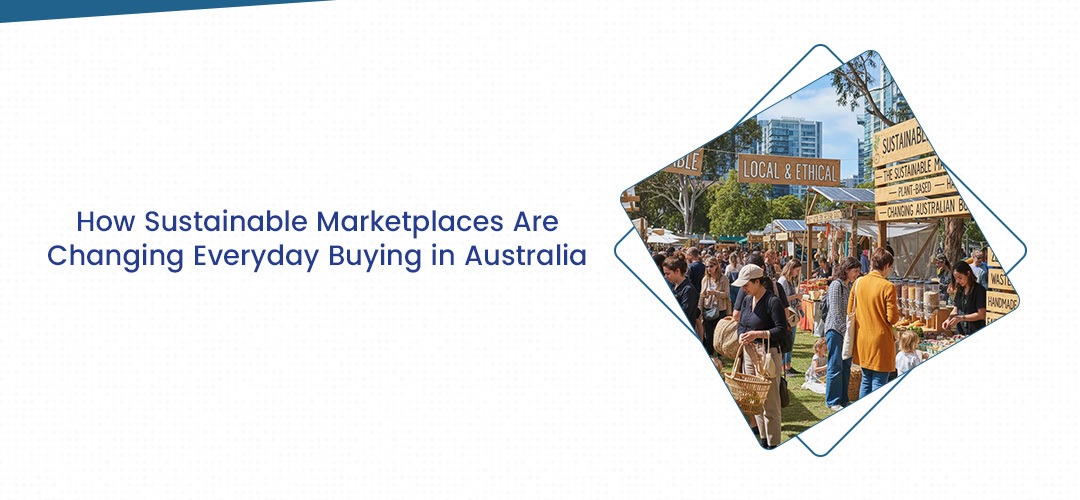

How Sustainable Marketplaces Are Changing Everyday Buying in Australia

Eversabz
Key Takeaways
Sustainable marketplaces are making conscious buying easier for Australian households by improving access to responsible products, verified businesses, and transparent information. Structured digital ecosystems are helping sustainability shift from an environmental ideal to a practical everyday habit.
Buying behaviour in Australia has traditionally balanced practicality with value. Households have long prioritised durability, reliability, and financial sensibility when making purchasing decisions. What is changing today is the addition of another consistent consideration: environmental responsibility.
This shift has not happened suddenly. It has evolved gradually as awareness grows and access to sustainable products becomes easier through curated marketplaces.
The key driver is not ideology. It is accessibility.
The Accessibility Barrier That Once Existed
A decade ago, Australians interested in eco friendly products often faced practical obstacles. Finding verified sustainable brands required significant effort. Consumers had to:
Research individual businesses
- Verify environmental claims
- Compare sourcing practices
- Investigate packaging materials
- Assess product durability independently
For busy households, this level of research was unrealistic. Even motivated consumers often reverted to conventional options because they were easier to access.
This accessibility gap slowed adoption. Today, that landscape is changing.
The Rise of Structured Sustainable Marketplaces
Digital ecosystems are emerging that consolidate responsible brands into one organised environment. Instead of navigating fragmented information, consumers can explore verified options in a structured format.
When Australians browse through a trusted sustainable marketplace, they gain access to curated products, transparent information, and responsible businesses within a single ecosystem.
This consolidation reduces friction. Reduced friction increases action.
Transparency as a Purchasing Driver
Modern Australian consumers are increasingly informed. They rarely rely solely on advertising claims. Instead, they evaluate:
- Where products are made
- What materials are used
- How long products are expected to last
- Whether packaging is recyclable or compostable
- Whether sourcing practices are ethical
Transparency builds trust.
Sustainable marketplaces simplify transparency by presenting verified information upfront rather than requiring consumers to dig for it.
Clarity accelerates decision making.
Sustainability as Practical Value
Australian households are pragmatic. Environmental responsibility alone rarely drives purchasing decisions. It becomes influential when paired with tangible benefits such as:
- Long term cost savings
- Product durability
- Reduced maintenance
- Energy efficiency
- Improved home functionality
Sustainable marketplaces that highlight lifecycle value alongside environmental impact resonate more strongly than purely idealistic messaging.
Consumers do not want to feel they are sacrificing practicality for sustainability. They want alignment between both.
Urbanisation and Selective Consumption
Australia’s urban population continues to grow. With rising housing costs and compact living spaces, households are becoming more selective about what they bring into their homes.
This shift encourages:
- Multi functional products
- Durable furnishings
- Minimal packaging
- Space efficient design
- High utility purchases
Sustainable marketplaces often feature curated, quality driven collections that naturally align with these urban priorities.
Less clutter. More function. Lower environmental impact.
The Psychology of Curated Choice
Interestingly, too many choices can overwhelm consumers. Traditional e commerce platforms often present thousands of products without context.
Curated sustainable ecosystems take a different approach. They narrow selection based on responsibility criteria. This creates psychological relief.
Consumers feel more confident when they know products have already met certain sustainability standards. Trust reduces decision fatigue.
Decision ease increases conversion.
Building Consumer Trust Through Verification
Trust remains central to sustainable adoption.
Australians are increasingly cautious of exaggerated environmental claims. Greenwashing has created scepticism. Consumers now look for consistency between messaging and practice.
Sustainable marketplaces help mitigate this scepticism by:
- Highlighting verified brands
- Presenting clear sourcing information
- Showcasing responsible business practices
- Reducing reliance on vague claims
Verification builds credibility.
Credibility builds loyalty.
The Influence of Digital Discovery
Digital research habits have transformed purchasing behaviour. Before making significant purchases, Australian consumers frequently:
- Read reviews
- Compare alternatives
- Research brand values
- Examine material sourcing
- Evaluate durability claims
When responsible brands are grouped within a structured ecosystem, this research process becomes more efficient.
Convenience increases confidence.
Confidence increases purchasing consistency.
Economic Realities and Lifecycle Thinking
Australia’s economic landscape has encouraged greater financial awareness. Rising living costs, mortgage pressures, and energy expenses influence purchasing priorities.
Sustainability aligns naturally with lifecycle thinking.
Instead of evaluating price alone, households consider:
- Total cost of ownership
- Maintenance frequency
- Energy efficiency
- Replacement cycles
Durable products often outperform cheaper alternatives over time.
Sustainable marketplaces that emphasise long term value help consumers align environmental and financial decision making.
Community and Collective Awareness
Another strength of structured sustainable ecosystems is community influence.
Consumers often seek reassurance through shared values. When brands are presented within a broader responsible network, it reinforces legitimacy.
Community driven ecosystems foster:
- Knowledge sharing
- Responsible purchasing norms
- Ongoing sustainability education
- Collective accountability
This collective dimension strengthens behavioural consistency.
Complementing Traditional Retail
It is important to note that sustainable marketplaces do not replace traditional retail entirely. Instead, they complement it.
Many Australians move fluidly between conventional retailers and responsible platforms depending on context. The key difference lies in intentionality.
When sustainable options are accessible and clearly presented, they become a realistic alternative rather than a niche choice.
Education Through Exposure
Exposure to responsible products often sparks deeper curiosity. Consumers begin exploring:
- Waste reduction
- Circular economy models
- Ethical sourcing
- Resource efficiency
- Repair culture
Marketplaces function not only as sales platforms but also as educational gateways.
Information empowers decision making.
Overcoming Misconceptions
Several misconceptions historically slowed adoption:
- Sustainable products are always expensive
- Eco options compromise quality
- Availability is limited
- Selection is narrow
Modern sustainable marketplaces challenge these assumptions by presenting diverse, competitively priced options with verified durability.
As availability increases, resistance decreases.
The Business Perspective
From a business standpoint, structured ecosystems offer advantages as well:
- Increased visibility among conscious consumers
- Association with responsible standards
- Enhanced credibility
- Access to targeted audiences
Brands that prioritise transparency and durability often benefit from ecosystem participation.
Long Term Market Outlook
Looking ahead, sustainability in Australia is unlikely to remain a specialised purchasing category. Instead, it may gradually become a baseline expectation.
Consumers will increasingly expect:
- Responsible sourcing
- Durable design
- Minimal waste packaging
- Transparent communication
Sustainable marketplaces are accelerating this shift by making responsible options visible and accessible.
Over time, the distinction between “sustainable” and “standard” may narrow.
Conclusion
Sustainable marketplaces in Australia represent a bridge between intention and action.
Many households already value practicality, durability, and financial responsibility. What they require is accessibility and clarity.
By consolidating responsible brands into structured, transparent ecosystems, sustainable marketplaces reduce complexity and increase adoption.
The shift is gradual. It is practical. It is grounded in everyday realities rather than abstract ideals.
And most importantly, it aligns sustainability with the values Australian households have held for decades.